I'm polishing the spoons wrong. Mam's good spoons, the ones with the roses worn thin on the handles, and I've done the same one three times because my hand keeps stopping halfway through the stroke and I have to start again. The cloth's gone grey. Dad's in the front room in the box the undertaker brought, and I said I'd sit with him tonight because that's what we do here, we don't leave them alone the last night, and I said I'd have the spoons done for the tea after, for tomorrow, for the people who'll come back to the house.
It's not tomorrow yet. Twenty past eleven, and the kettle's boiled twice already because I keep forgetting I put it on. There's a mug of it gone cold on the counter, my sister's mug actually, the one with the faded rugby badge, though she's not even here tonight, she's stopping at her in-laws' and I don't know why I reached for that one.
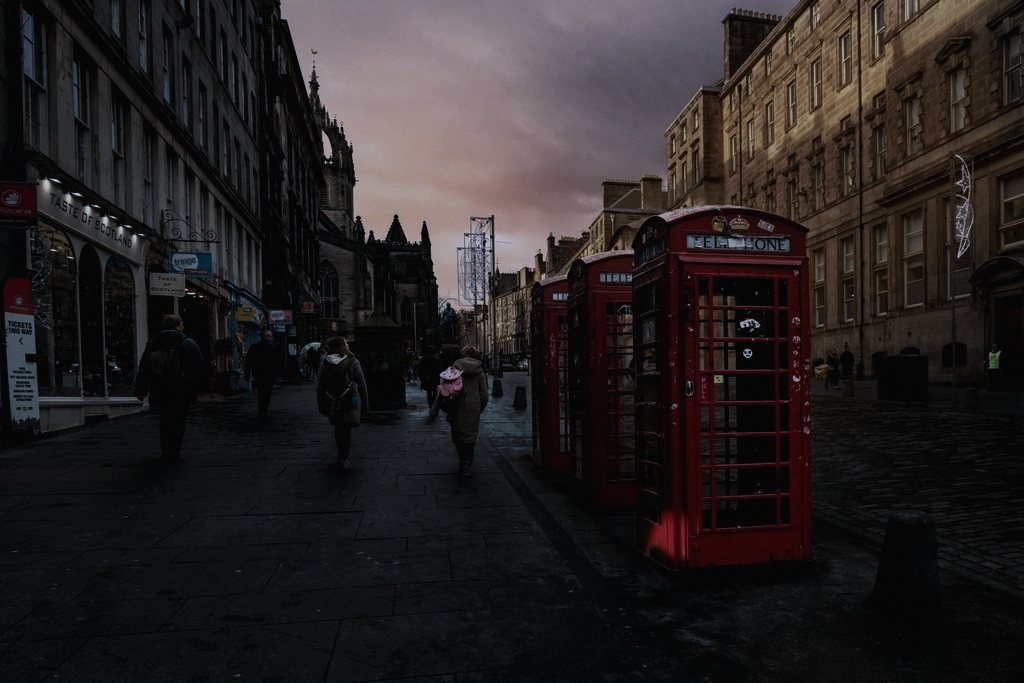
The box across the green is the old red kind, the ones they took the phones out of when British Telecom did the exchange work in '87. No handset for years. No wires, Dad used to say, laughing, pulling the door open to show me the empty cradle where the receiver should hang, look, nothing, it's a lie of a phone box now, love, good for nothing but keeping the rain off if you're caught short walking back from the Crown.
Except it rings. Not often. Only for funerals, and only during them, never before, never after, and only from inside the church can you hear it, thin and far off across the green. Everyone pretends not to notice. Somebody's aunt always says isn't that strange, somebody's uncle always says leave it, and the vicar keeps talking. It rang for Nain's funeral. It rang for Wyn Pritchard's, and Wyn's grandson told me after that his mother went white as the cloth I'm holding now and gripped his hand hard enough to bruise.
I put the spoon down. I've done the handle so many times it's warm.
The front room is quiet in the particular way a room is quiet when there's a person in it who isn't breathing. I sat with him an hour ago, said the things you say, told him about the spoons, about how Mam would want the good ones out, and then I came back to the kitchen because I couldn't manage that and the crying at the same time, and the crying wasn't finished yet.
The clock over the cooker says twenty to twelve.
The service isn't until nine in the morning. Nine hours off, and I know that the way I know my own name, so when the sound comes across the green, faint, ordinary, two short rings and a pause and two more, I stand in the kitchen with the cloth still in my hand and count the hours again on my fingers, twice, as though the second count might come out different.
I go out without my coat. The grass is wet through my socks before I reach the road. The green is empty, no cars, no lights on in the terrace, just the box standing there with its paint gone the colour of a scab under the one streetlamp, door hanging a half-inch open the way it always does, warped on its hinge.
The receiver is off the cradle. It never has a receiver. It is swinging very slightly, on nothing, side to side, the small arc a thing makes when a hand has only just let go of it.
I stand at the glass and watch it slow.